Reduces Stress
By focusing on the present, mindfulness can help break the cycle of worry and stress that comes from thinking about past or future events.


Practicing mindfulness means paying full attention to the present moment without judgment. It's about noticing what's happening within you and around you, right now, without dwelling on the past or worrying about the future. Mindfulness can enhance your quality of life by reducing stress, improving mental health, and fostering a deeper understanding of yourself and your emotions.
By focusing on the present, mindfulness can help break the cycle of worry and stress that comes from thinking about past or future events.
Regular mindfulness practice has been shown to reduce symptoms of anxiety and depression and can lead to better emotional regulation.
Mindfulness trains your brain to focus on the task at hand, improving your ability to concentrate and perform tasks effectively.
Mindfulness encourages a deeper understanding of your thoughts, feelings, and behaviors, which can lead to more self-compassion and patience with yourself.
Studies have found mindfulness to be linked with lower blood pressure, improved sleep, and a stronger immune system.
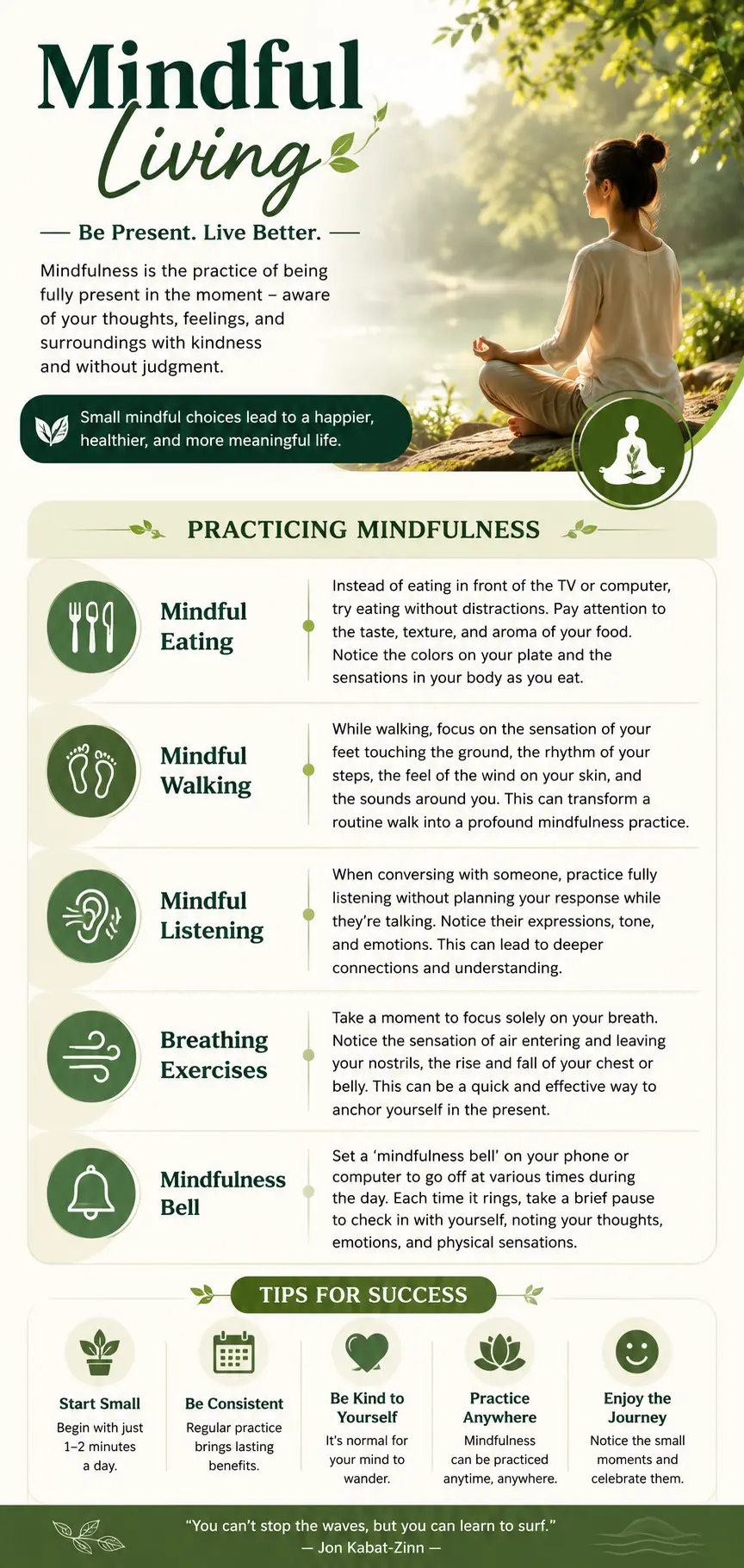
 Mindful Eating — Instead of eating in front of
the TV or computer, try eating without distractions. Pay
attention to the taste, texture, and aroma of your food. Notice
the colors on your plate and the sensations in your body as you
eat.
Mindful Walking — While walking, focus on the
sensation of your feet touching the ground, the rhythm of your
steps, the feel of the wind on your skin, and the sounds around
you. This can transform a routine walk into a profound
mindfulness practice.
Mindful Listening — When conversing with
someone, practice fully listening without planning your response
while they're talking. Notice their expressions, tone, and
emotions. This can lead to deeper connections and understanding.
Breathing Exercises — Take a moment to focus
solely on your breath. Notice the sensation of air entering and
leaving your nostrils, the rise and fall of your chest or belly.
This can be a quick and effective way to anchor yourself in the
present.
Mindfulness Bell — Set a 'mindfulness bell' on
your phone or computer to go off at various times during the
day. Each time it rings, take a brief pause to check in with
yourself, noting your thoughts, emotions, and physical
sensations.
Start Small — Begin with just a few minutes of
mindfulness practice each day and gradually increase as you
become more comfortable with the practice.
Use Reminders — Post-it notes, phone alarms, or
specific triggers (like every time you open a door) can remind
you to pause and practice mindfulness throughout your day.
Be Patient and Kind to Yourself — Mindfulness
is a skill that takes time to develop. Treat yourself with
kindness if your mind wanders or you find it challenging to
focus.
Incorporate Mindfulness into Daily Activities
— Try to bring a mindful awareness to regular activities such as
showering, brushing your teeth, or doing household chores.
Explore Formal Practices — Consider exploring
formal mindfulness practices such as guided meditations,
mindfulness-based stress reduction programs, or yoga classes to
deepen your practice.
Flexibility — Your mindfulness practice day
chart is a guideline, not a strict schedule. Adjust the times
and activities as needed to fit your lifestyle.
Consistency — Try to be consistent with your
practice, even if some sessions are shorter on certain days.
Gentleness — Approach your practice with
kindness and compassion towards yourself, especially on days
when mindfulness feels more challenging.
Exploration — Feel free to add or swap
activities that resonate more with you, such as mindful
gardening, crafting, or any other hobbies that allow you to be
present.
Keep Your Chart Visible — Place your chart
somewhere you will see it often, like on your fridge, next to
your computer, or in your planner.
Be Flexible — Your mindfulness chart is a
living document. Feel free to adjust it as needed to fit your
evolving routine and mindfulness goals.
Involve Others — Share your mindfulness goals
with friends or family. They can offer support, and you might
inspire them to start their own practice.
Mindful Eating — Instead of eating in front of
the TV or computer, try eating without distractions. Pay
attention to the taste, texture, and aroma of your food. Notice
the colors on your plate and the sensations in your body as you
eat.
Mindful Walking — While walking, focus on the
sensation of your feet touching the ground, the rhythm of your
steps, the feel of the wind on your skin, and the sounds around
you. This can transform a routine walk into a profound
mindfulness practice.
Mindful Listening — When conversing with
someone, practice fully listening without planning your response
while they're talking. Notice their expressions, tone, and
emotions. This can lead to deeper connections and understanding.
Breathing Exercises — Take a moment to focus
solely on your breath. Notice the sensation of air entering and
leaving your nostrils, the rise and fall of your chest or belly.
This can be a quick and effective way to anchor yourself in the
present.
Mindfulness Bell — Set a 'mindfulness bell' on
your phone or computer to go off at various times during the
day. Each time it rings, take a brief pause to check in with
yourself, noting your thoughts, emotions, and physical
sensations.
Start Small — Begin with just a few minutes of
mindfulness practice each day and gradually increase as you
become more comfortable with the practice.
Use Reminders — Post-it notes, phone alarms, or
specific triggers (like every time you open a door) can remind
you to pause and practice mindfulness throughout your day.
Be Patient and Kind to Yourself — Mindfulness
is a skill that takes time to develop. Treat yourself with
kindness if your mind wanders or you find it challenging to
focus.
Incorporate Mindfulness into Daily Activities
— Try to bring a mindful awareness to regular activities such as
showering, brushing your teeth, or doing household chores.
Explore Formal Practices — Consider exploring
formal mindfulness practices such as guided meditations,
mindfulness-based stress reduction programs, or yoga classes to
deepen your practice.
Flexibility — Your mindfulness practice day
chart is a guideline, not a strict schedule. Adjust the times
and activities as needed to fit your lifestyle.
Consistency — Try to be consistent with your
practice, even if some sessions are shorter on certain days.
Gentleness — Approach your practice with
kindness and compassion towards yourself, especially on days
when mindfulness feels more challenging.
Exploration — Feel free to add or swap
activities that resonate more with you, such as mindful
gardening, crafting, or any other hobbies that allow you to be
present.
Keep Your Chart Visible — Place your chart
somewhere you will see it often, like on your fridge, next to
your computer, or in your planner.
Be Flexible — Your mindfulness chart is a
living document. Feel free to adjust it as needed to fit your
evolving routine and mindfulness goals.
Involve Others — Share your mindfulness goals
with friends or family. They can offer support, and you might
inspire them to start their own practice.
A simple, flexible schedule you can adjust to your own lifestyle.
Morning — Upon Waking (5–10 min): a brief
mindfulness meditation, focusing on the breath. Mindful
Showering and Dressing (10–15 min). Mindful Breakfast (15–20
min), eating without distractions.
Midday — Mindful Walking (10–15 min), focusing
on the sensation of each step. Mindful Eating Lunch (20–30 min),
chewing slowly and appreciating the meal.
Afternoon — Mindfulness Reminder (1–2 min,
several times), pausing to take a few deep breaths. Mindful
Work Break (5–10 min), a body scan to release tension.
Evening — Mindful Commuting (duration varies).
Mindful Dinner (20–30 min), with meaningful conversation or
quiet tranquility. Gratitude Reflection (5–10 min), noting
three things you're grateful for.
Night — Mindful Unwinding (15–30 min): reading,
calm music, or gentle yoga. Mindful Breathing Before Sleep
(5–10 min), a body scan to relax before bed.
| Time | Activity | Mindfulness Practice | Notes / Reflections |
|---|---|---|---|
| Morning | Waking Up | Take three deep breaths before getting out of bed | Felt more centered |
| Breakfast | Eating | Eat mindfully, focusing on the taste and texture of the food | Enjoyed my meal more |
| Work/Study | Starting Work/Study | Mindful transition: deep breathing before beginning | Helped focus |
| Mid-Morning | Short Break | 5-minute mindfulness meditation or a mindful walk | Refreshed my mind |
| Lunch | Eating Lunch | Eat away from desk, mindfully savoring each bite | Less rushed, calmer |
| Afternoon | Work/Study Continues | Mindful listening in meetings or during conversations | Improved engagement |
| Evening | Transition to Home | Mindful commute: notice surroundings or practice gratitude | Reduced stress |
| Dinner | Cooking/Eating | Cook/eat with awareness, appreciate flavors and company | More enjoyable meal |
| Night | Preparing for Bed | Digital detox, brief reflection or gratitude practice | Improved sleep quality |
Mindfulness isn't about achieving a perfect state of calm or emptiness but rather about being present and aware of your life as it unfolds, moment by moment.